





By the time Maguno arrived in the United States as a refugee in 2023, she had already experienced a lifetime of challenges.
Decades earlier, when her children were only 8 and 12 years old, Maguno and her family were forced to flee their home in the Democratic Republic of Congo. They found their way into a refugee camp, where she would live for the next 30 years. Then, after years of waiting, the U.S. government invited her to resettle. Some time later she was welcomed into Olympia, Washington, by our local World Relief office.
Life, however, continued to present new struggles. Despite her efforts, jobs were elusive.
But that’s where the church stepped in.
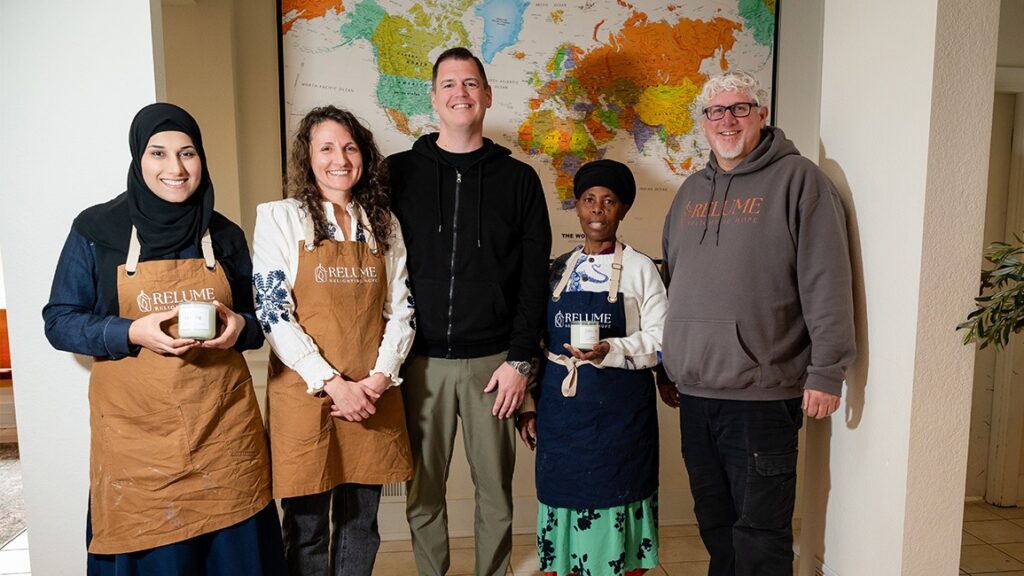
As Maguno worked to find employment, Reality Church in Washington walked alongside her in this journey. Together, two attendees of Reality Church, Karima and Rand, joined together to create Relume, a candle company that establishes employment opportunities for refugees and other immigrants. Maguno was their first employee.
It’s not an accident that Relume began inside the walls of Reality Church. For years, church leaders like Paul Jones, pastor of Reality, had been fostering a vision for bringing hope and renewal to refugees and other immigrants. Even objects such the map Paul hung in the main sanctuary have helped this congregation develop a heart for the world. As Paul reflects, “It’s felt almost prophetic — placing it there has helped give us and our kids a vision of God’s work in the world, reminding us that we’re not at the center of it.”
Now, Paul shares that this work in welcoming refugees is bearing fruit. “We have given a lot, I would say, in welcoming refugees as friends to our community,” Paul explains. “But we have received far more in just the richness of relationship and seeing God’s Kingdom in a more full and diverse expression than our prior experience.”
This Pastor Appreciation Day, we want to take a moment to celebrate church leaders like Paul: pastors who are shaping the vision of their churches, encouraging their members to lead with light as families from around the world face crises and disasters.
What Is Pastor Appreciation Day?
Each year on the second Sunday of October, many churches across the United States and beyond take time to recognize “Pastor Appreciation Day,” a day dedicated to acknowledging and celebrating the work that pastors and other clergy do in service to God, their churches and the broader community. This year, Pastor Appreciation Day falls on October 11.
Life as a pastor certainly has its challenges. But day in and day out, pastors and ministers step up to the call, faithfully serving to bring the hope of restoration and healing to members of their congregation and the community that surrounds them. Pastor Appreciation Day is a pause in our ordinary calendar to recognize their efforts — to say “thanks” to our church leaders who often serve behind the scenes to meet the needs of countless in their everyday lives.
Why We Celebrate Pastor Appreciation Day
At World Relief, we believe that God has called us to boldly engage the world’s greatest crises in partnership with the church. The church is not an add-on to that call. We believe that it’s integral. God has designed the church to be his instrument of redemption and healing in the world.
From the very beginning, we have been an organization committed to close partnership with the church — even starting in a church back in 1944! Since then, for 80 years and across 100 countries, we have been walking alongside displaced people to bring restoration, hope and healing. Our job is to join the church as it fulfills its mission to bring Christ’s work to people all across the world — especially during times of crisis.
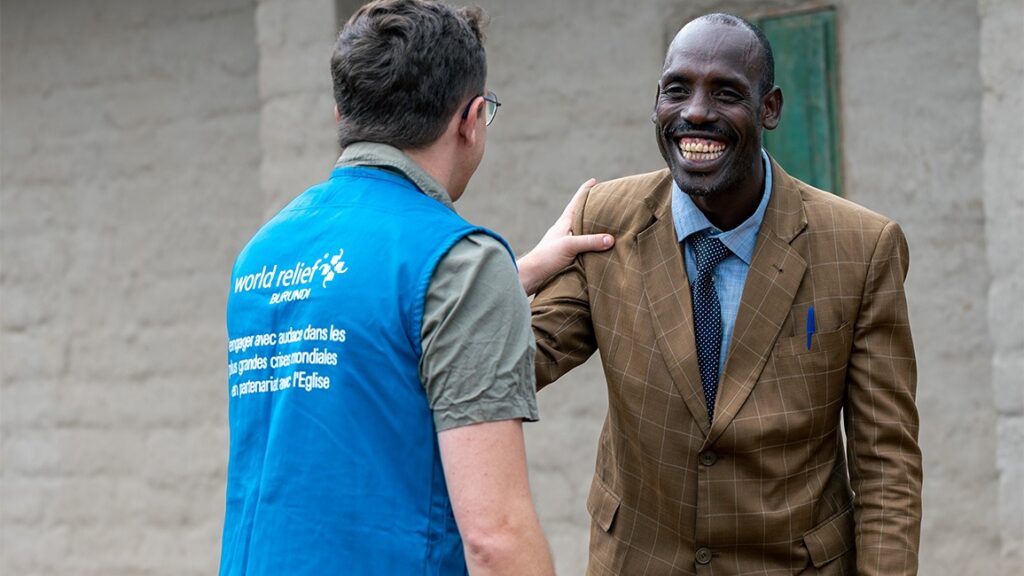
Fabien Macumi, who serves both as a staff member of World Relief DR Congo and as a pastor of a local church in his home country of DRC, explains it this way: “Partnering with the church is vital in humanitarian response because local congregations serve as first responders, with established networks, deep community trust and a permanent presence. They provide not only immediate relief but also long-term social support and emotional resilience in ways [humanitarian] agencies often cannot. When disasters strike, they are already on the scene.”
At the heart of this ministry of the church is the work of pastors, who lead their congregations to fulfill this vision in the community. Pastors are often on the front lines of bringing redemption and healing into the world, showing everyone what it means to be the hands and feet of Christ.
Our Vision for Partnership
Across the world, families continue to grapple with seemingly insurmountable challenges. Conflict, persecution and other disasters are forcing more people than ever to flee their homes. Meanwhile, public support continues to decline, meaning that the 117 million who are displaced have fewer systems of support than ever before.
Alongside the church, this is where we step in. Together with the church, we are boldly responding to the world’s greatest crises, inspired by the audacious belief that human flourishing is possible — even amid the hardest of circumstances. Through more than 4,400 church partnerships, we are coming alongside these families in crisis, interrupting the scale of human suffering through work that provides relief, accelerates resilience, and paves the way for flourishing and restoration.
That’s why, together with churches across the world, we are celebrating the work of pastors today. As they shepherd their congregations to be doers of the Word, not just hearers, communities are being transformed by their faithfulness and their commitment to action.
To pastors, church leaders, clergy and faithful ministers, we want to say: Thank you!

Samuel Heard serves as a content specialist at World Relief. His writing has appeared in a variety of outlets, including Baptist Press, Mere Orthodoxy, the Center for Faith and Culture and elsewhere. He lives in Upstate South Carolina with his wife and three children.